
 Image 1 of 2
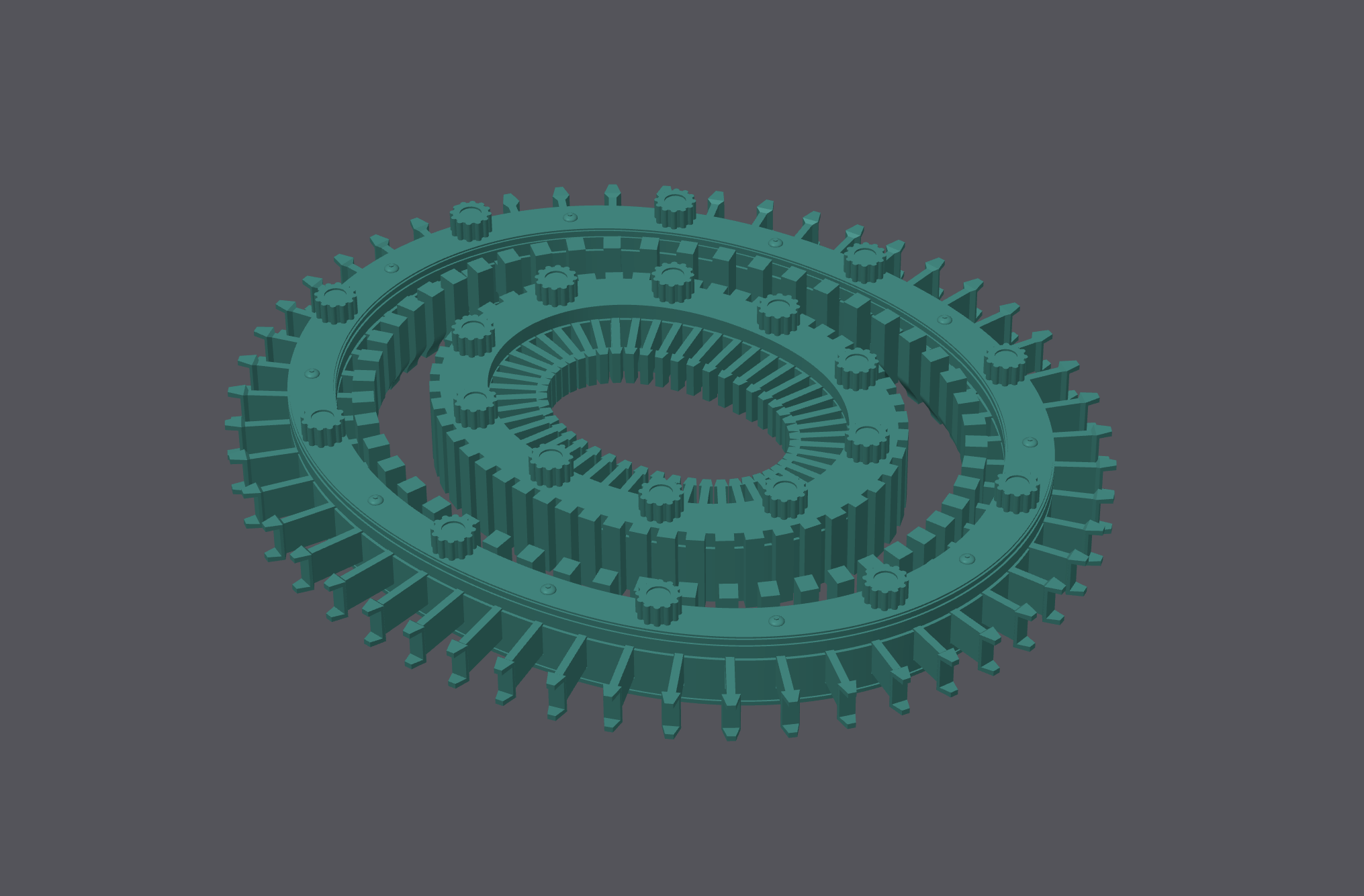 Image 2 of 2
The WhipperWill Hats Conformer and Formillion V is a redesigned, more rigid version of the original 50-slider fitting and transfer system.
The update preserves the established measuring geometry and sizing range while substantially simplifying the locking system. Both tools now use flat locking rings and continuous replaceable cork pressure liners rather than individual slider pockets or complicated captured-channel geometry.
The Conformer records the customer’s exact head shape through 50 independently moving sliders. Once the profile has been locked, the matching Formillion reproduces that shape inside the hat during fitting and finishing.
Compact 31 mm structural height on both the Conformer and Formillion
Matching vertical proportions between both tools
Original 50-slider measurement geometry preserved
Established WhipperWill hatter’s oval preserved
Approximate 530–650 mm intended fitting range, with additional mechanical overtravel
Continuous cork pressure liners provide even friction across the sliders
Simplified ten-point locking pattern on each tool
Reduced screw count compared with the previous locking system
Flat locking-ring undersides
Full-height measuring T-heads
Enlarged Conformer slider stops for 1/2-inch elastic
Open elastic saddle designed to print without internal supports
Two Conformer slider options:
Standard T-head
Curved-entry T-head
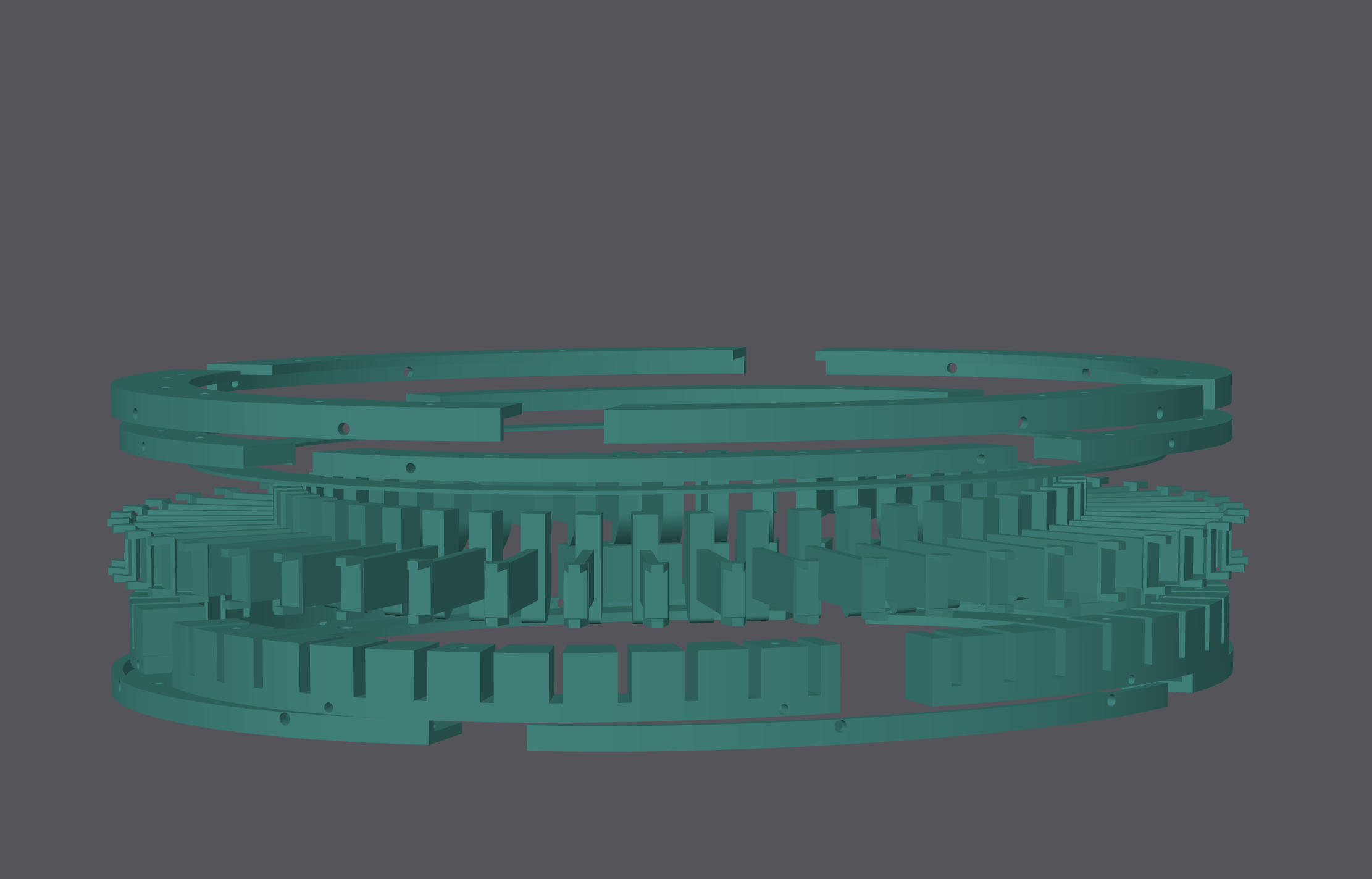
Compact vertical exploded view for easier inspection and STL export
Conformer ring components remain segmented for standard printers
Formillion rings remain complete, one-piece rings
The file set includes selectable views for:
Complete assembled Conformer
Complete assembled Formillion
Compact vertical exploded view
Conformer ring components
Standard Conformer sliders
Curved-entry Conformer sliders
Formillion sliders
Conformer cork liner template
Formillion cork liner template
Individual parts for STL export
The default compact exploded view positions the Conformer and Formillion beside one another, with enough vertical clearance to separate every component without creating an unnecessarily tall display.
Reduced the height and complexity of the original locking architecture.
Preserved the existing 50-slider measurement layout and established oval geometry.
Removed individual locking-ring slider pockets.
Removed complicated ribbed or captured locking structures.
Replaced the previous pressure arrangement with continuous cork friction liners.
Reduced each tool to ten evenly distributed locking screws.
Main ring retained at 18 mm.
Added a 3 mm lower backer ring.
Added a 6 mm locking ring.
Added a 3 mm upper backer ring.
Added a 1 mm replaceable cork pressure liner.
Total structural height is now approximately 31 mm.
Slider bodies project approximately 0.6 mm above their channels for reliable cork compression.
Measuring T-heads now span the full assembled height.
Added softened exterior edges to improve appearance and handling.
Added captured M3 nut pockets for the ten locking screws.
Added clearance openings beneath the locking screws in the lower backer.
Added ten alternating assembly-screw locations for each backer.
Added standard and curved-entry measuring T-head options.
Enlarged the outer slider stopper.
Added a support-free transition between the slider body and stopper.
Added an open saddle for nominal 12.7 mm / 1/2-inch elastic.
Increased the main Formillion ring height to 24 mm.
Added a 1 mm replaceable cork pressure liner.
Added a 6 mm locking ring.
Total structural height now matches the Conformer at approximately 31 mm.
Adjusted slider body elevation to suit the deeper ring.
Increased the outer measuring T-head height to span the complete assembly.
Preserved the established 5 mm outer T-head length and measuring-face position.
Preserved the established slider travel and transfer geometry.
Added ten locking screws with captured M3 nuts.
Added a dedicated Formillion cork-liner template.
20 × M3 × 30 mm locking thumbscrews
20 × standard M3 hex nuts
10 × M3 × 10 mm button-head screws
10 × M3 × 8 mm button-head screws
One length of 12.7 mm / 1/2-inch elastic
1 mm sheet cork for both pressure liners
The WhipperWill Hats Conformer and Formillion V is a redesigned, more rigid version of the original 50-slider fitting and transfer system.
The update preserves the established measuring geometry and sizing range while substantially simplifying the locking system. Both tools now use flat locking rings and continuous replaceable cork pressure liners rather than individual slider pockets or complicated captured-channel geometry.
The Conformer records the customer’s exact head shape through 50 independently moving sliders. Once the profile has been locked, the matching Formillion reproduces that shape inside the hat during fitting and finishing.
Compact 31 mm structural height on both the Conformer and Formillion
Matching vertical proportions between both tools
Original 50-slider measurement geometry preserved
Established WhipperWill hatter’s oval preserved
Approximate 530–650 mm intended fitting range, with additional mechanical overtravel
Continuous cork pressure liners provide even friction across the sliders
Simplified ten-point locking pattern on each tool
Reduced screw count compared with the previous locking system
Flat locking-ring undersides
Full-height measuring T-heads
Enlarged Conformer slider stops for 1/2-inch elastic
Open elastic saddle designed to print without internal supports
Two Conformer slider options:
Standard T-head
Curved-entry T-head
Compact vertical exploded view for easier inspection and STL export
Conformer ring components remain segmented for standard printers
Formillion rings remain complete, one-piece rings
The file set includes selectable views for:
Complete assembled Conformer
Complete assembled Formillion
Compact vertical exploded view
Conformer ring components
Standard Conformer sliders
Curved-entry Conformer sliders
Formillion sliders
Conformer cork liner template
Formillion cork liner template
Individual parts for STL export
The default compact exploded view positions the Conformer and Formillion beside one another, with enough vertical clearance to separate every component without creating an unnecessarily tall display.
Reduced the height and complexity of the original locking architecture.
Preserved the existing 50-slider measurement layout and established oval geometry.
Removed individual locking-ring slider pockets.
Removed complicated ribbed or captured locking structures.
Replaced the previous pressure arrangement with continuous cork friction liners.
Reduced each tool to ten evenly distributed locking screws.
Main ring retained at 18 mm.
Added a 3 mm lower backer ring.
Added a 6 mm locking ring.
Added a 3 mm upper backer ring.
Added a 1 mm replaceable cork pressure liner.
Total structural height is now approximately 31 mm.
Slider bodies project approximately 0.6 mm above their channels for reliable cork compression.
Measuring T-heads now span the full assembled height.
Added softened exterior edges to improve appearance and handling.
Added captured M3 nut pockets for the ten locking screws.
Added clearance openings beneath the locking screws in the lower backer.
Added ten alternating assembly-screw locations for each backer.
Added standard and curved-entry measuring T-head options.
Enlarged the outer slider stopper.
Added a support-free transition between the slider body and stopper.
Added an open saddle for nominal 12.7 mm / 1/2-inch elastic.
Increased the main Formillion ring height to 24 mm.
Added a 1 mm replaceable cork pressure liner.
Added a 6 mm locking ring.
Total structural height now matches the Conformer at approximately 31 mm.
Adjusted slider body elevation to suit the deeper ring.
Increased the outer measuring T-head height to span the complete assembly.
Preserved the established 5 mm outer T-head length and measuring-face position.
Preserved the established slider travel and transfer geometry.
Added ten locking screws with captured M3 nuts.
Added a dedicated Formillion cork-liner template.
20 × M3 × 30 mm locking thumbscrews
20 × standard M3 hex nuts
10 × M3 × 10 mm button-head screws
10 × M3 × 8 mm button-head screws
One length of 12.7 mm / 1/2-inch elastic
1 mm sheet cork for both pressure liners